Depression is a serious mood disorder that causes persistent feelings of sadness, hopelessness, and emptiness. Unlike short-term sadness, depression continues to affect daily life despite a person’s efforts to feel better. It can interfere with thinking, behavior, and daily activities such as sleeping, eating, and working.
Depression affects people of all ages — including children and teenagers — and can significantly impact relationships, work performance, and overall quality of life.
You may not know why you feel this way, and symptoms often persist despite efforts to “snap out of it.” Depression often requires long-term treatment, but seeking help at the earliest signs can make symptoms easier to manage and improve outcomes.
At Vivabest Psychiatry, we specialize in diagnosing and treating depression with an individualized approach that addresses the full range of symptoms and underlying causes.
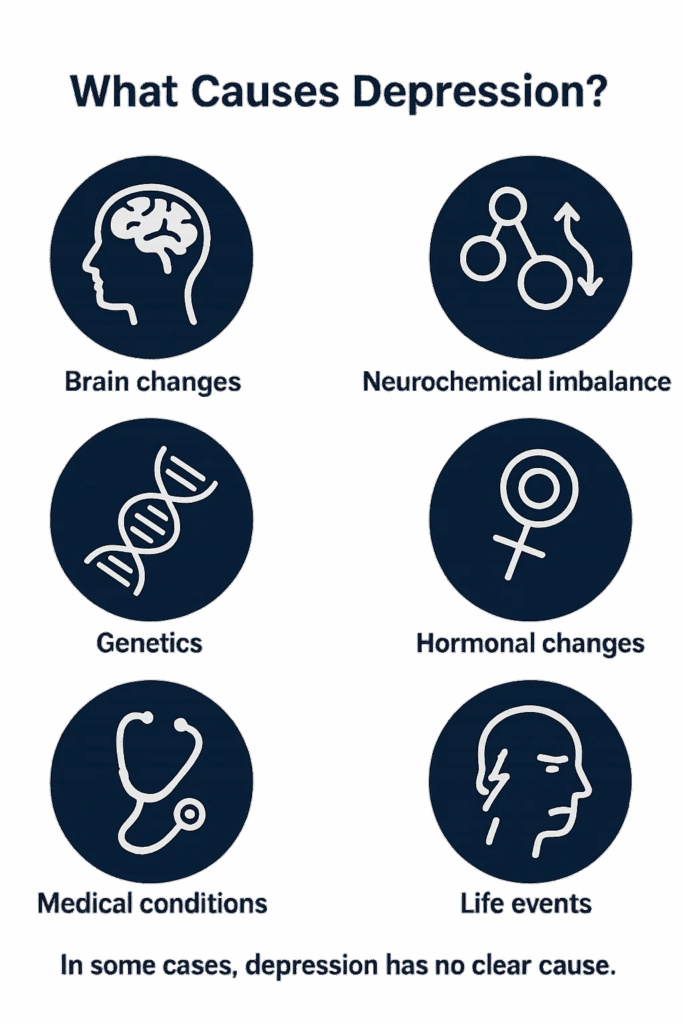
Depression develops from a combination of biological, psychological, and environmental factors. Common contributing factors include:
We are committed to delivering outstanding care and empowering you to regain control of your mental health.
Depression looks different for everyone, and symptoms may vary by age, sex, and health status.
Common symptoms include:
Children and teens may appear more irritable than sad, act out, or sleep excessively.
Men may be more likely to show irritability, anger, or risk-taking behaviors rather than sadness.
Older adults may have more physical complaints and less obvious mood changes.

1. Major Depressive Disorder (MDD)
Severe symptoms that interfere with daily functioning, lasting at least two weeks.
2. Persistent Depressive Disorder (Dysthymia)
Chronic depression with less severe symptoms than MDD, lasting two or more years.
3. Seasonal Affective Disorder (SAD)
Depression that occurs seasonally, typically in fall and winter, improving in spring and summer.
4. Premenstrual Dysphoric Disorder (PMDD)
A severe form of PMS involving significant depression, anxiety, and mood swings before menstruation.
5. Peripartum (Perinatal) Depression – formerly postpartum depression
Not Just the ‘Baby Blues’. Perinatal depression refers to depression occurring during pregnancy or after childbirth. The use of the term perinatal recognizes that depression associated with having a baby often begins during pregnancy. Symptoms can involve intense sadness, anxiety, or exhaustion that may interfere with a mother’s ability to care for herself or her baby.
6. Bipolar disorder is sometimes called manic depression. This mood disorder can cause intense mood swings.
7. Depression with Psychotic Features
Severe depression accompanied by delusions or hallucinations.
Most people benefit from a combination of treatments tailored to their needs:
1. Psychotherapy (Talk Therapy)
2. Medication Management
3. Brain Stimulation Therapies
4. Other Treatments

We use cookies to enhance your browsing experience. serve personalized ads or content and analyezn our traffic. By clicking "Accept All" your conset to our use of cookies.
Manage your cookie preferences below:
Essential cookies enable basic functions and are necessary for the proper function of the website.
These cookies are needed for adding comments on this website.
Google reCAPTCHA helps protect websites from spam and abuse by verifying user interactions through challenges.