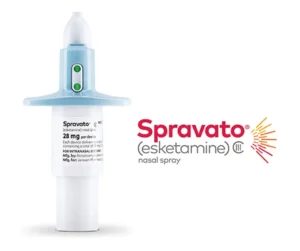
Esketamine (Spravato)
Overview
Esketamine, sold as Spravato, is a prescription nasal spray for certain forms of severe depression. It is a ketamine-derived medication that works differently than most traditional antidepressants by acting as a non-competitive NMDA receptor antagonist and influencing glutamate signaling in the brain.
Approved uses
Spravato is FDA-indicated for adults in two main situations:
- Treatment-resistant depression (TRD): approved for adults as monotherapy or used together with an oral antidepressant.
- Depressive symptoms in adults with major depressive disorder (MDD) with acute suicidal ideation or behavior: approved only in conjunction with an oral antidepressant.
A key limitation is that Spravato has not been shown to prevent suicide or reduce suicidal ideation or behavior; clinical decisions such as hospitalization may still be needed even if symptoms improve after dosing.
What changed with monotherapy
As of January 21, 2025, Spravato gained approval for use as a standalone treatment for adults with TRD, meaning an oral antidepressant is no longer required for eligibility in TRD when clinicians choose monotherapy.
How treatment is given
- Setting and supervision: Spravato must be administered in a certified healthcare setting under direct supervision; it is only available through the SPRAVATO REMS program.
- Monitoring: patients must be monitored for at least 2 hours after each dose; monitoring includes respiratory status and blood pressure checks.
- Driving and logistics: patients should not drive or operate machinery until the next day after a restful sleep; a ride home is typically needed.
- Typical dosing pattern in the text: dosing is often more frequent early on (commonly twice weekly during an induction phase) and then reduced during maintenance, individualized by response. The prescribing information describes twice-weekly dosing in short-term trials and maintenance commonly shifting to weekly or every-other-week schedules.
- Preparation: because nausea and vomiting can occur, patients are advised to avoid food for at least 2 hours before dosing and avoid liquids for at least 30 minutes before dosing; nasal steroids or decongestants should be taken at least 1 hour before Spravato on dosing days.
Speed of effect and clinical trial findings
Clinical studies described in the prescribing information show that most of Spravato’s separation from placebo was observed around 24 hours after dosing; effects were maintained through the 4-week study periods. This pattern is described both for combination therapy trials and for a monotherapy trial in TRD.
Safety, boxed warning, and common side effects
Spravato has an FDA boxed warning for:
- Sedation
- Dissociation and perceptual changes
- Respiratory depression
- Abuse and misuse (it is a Schedule III controlled substance)
- Suicidal thoughts and behaviors warning associated with antidepressants; Spravato is not approved for pediatric patients
Other important risks highlighted include:
- Increases in blood pressure that peak around 40 minutes and can last hours; certain vascular conditions are contraindications because BP or intracranial pressure increases can be dangerous.
- Cognitive impairment and impaired ability to drive until the next day.
- Bladder and urinary symptoms should be monitored.
Common side effects include dissociation, dizziness, nausea, sedation or sleepiness, vertigo, vomiting, anxiety, increased blood pressure, and headache.
Pregnancy and breastfeeding
The prescribing information warns of embryo-fetal toxicity and advises pregnancy planning and prevention for females of reproductive potential; it also notes a pregnancy exposure registry for antidepressant exposures, including Spravato. Breastfeeding is not recommended during treatment.